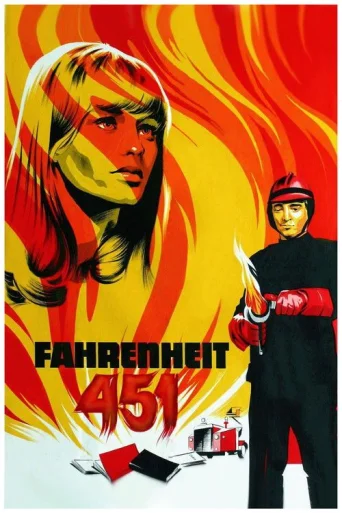
Synopsis
Fahrenheit 451 is a movie released in 1966.
In a chilling future where the written word is deemed a threat to societal harmony, a government enforces its draconian laws through ruthless censorship and the fiery destruction of literature. At the center of this dystopian world is Montag, a fireman whose job is to incinerate books and erase the very essence of human thought. As he becomes increasingly disillusioned with the oppressive regime and the hollow existence of his fellow citizens, Montag embarks on a transformative journey of self-discovery, challenging the very foundations of his beliefs and the world around him. This visually striking adaptation of Ray Bradbury's seminal novel explores profound themes of censorship, conformity, and the power of knowledge. With its haunting cinematography and thought-provoking dialogue, the film compels viewers to confront the implications of a society that forsakes intellectual freedom for the sake of control. As Montag grapples with his awakening, audiences are invited to reflect on their own relationship with literature and the vital role it plays in shaping identity and freedom. A powerful cautionary tale that resonates even today, this film is a compelling reminder of the enduring value of ideas and the importance of safeguarding the written word.












 Anglo Enterprises